You’ve thought about straightening your teeth for years. Maybe decades. Something always came up: college, career, kids, life. Now you’re wondering if you’ve missed your window.
Here’s the good news. You haven’t. Adult orthodontics is one of the fastest-growing areas of the field, and the options available today look nothing like the clunky metal you remember from middle school. Whether you’re 28 or 68, orthodontic treatment for adults is absolutely on the table.
This guide walks you through what adult treatment looks like today, the choices you have, what to expect, and how to decide if now is the right time to straighten your smile.

Can Adults Really Get Braces? The Short Answer
Yes. There is no age limit for orthodontic treatment. As long as you have healthy teeth, gums, and jawbone, your teeth can be moved and straightened at any stage of life.
Adults now make up a significant share of orthodontic patients, and that number keeps climbing as discreet options like clear aligners and tooth-colored brackets make treatment easier to fit into a professional life. Modern technology, from 3D scanning to self-ligating brackets, has also made the experience more comfortable and efficient than what your parents went through.
The bottom line: age is not the deciding factor. Your oral health is.
Why More Adults Are Choosing Orthodontic Treatment
Adults come to us for all kinds of reasons, and rarely is it just about looks. The “why now” moment is different for everyone.
Some common motivations we hear from our orthodontic family in Northwest Arkansas include:
- Career changes. A promotion, a new client-facing role, or a career shift often nudges people to invest in their smile and confidence.
- Big life events. Weddings, class reunions, and family photos have a way of putting your smile front and center.
- Shifting teeth. If you had braces as a teen and skipped your retainer, you may notice teeth drifting back over time. This is incredibly common.
- Health awareness. More adults are recognizing that crooked or crowded teeth aren’t just a cosmetic concern. They affect gum health, bite function, and long-term wear.
Whatever brings you in, the goal is the same: a healthier, more confident smile that fits your life today.
Health Benefits Beyond a Straighter Smile
A beautiful smile is a wonderful outcome, but straight teeth do a lot more than look good in photos. Orthodontic treatment is a real investment in your long-term oral health.
When your teeth and bite are properly aligned, you can expect:
- Easier daily cleaning. Straight teeth are simpler to brush and floss, which lowers your risk of cavities and gum disease.
- Relief from bite-related discomfort. A corrected bite can ease TMJ tension, jaw soreness, and certain types of headaches.
- Less tooth wear and fewer fractures. When your bite hits evenly, your teeth stop grinding down in the wrong spots.
- Better chewing and digestion. A functional bite helps you break down food properly.
- Longer-lasting teeth. Well-aligned teeth are easier to maintain for a lifetime.
Those benefits compound over the years, which is why many adults consider treatment one of the best health decisions they’ve ever made.
What Are the Best Adult Orthodontic Treatment Options?
Today’s adults have more choices than ever. The right fit depends on the complexity of your case, how visible you want the appliance to be, and whether you prefer something fixed or removable. Here’s a quick look at the main options.
| Option | Best For | Visibility |
|---|---|---|
| Self-ligating metal braces | Complex cases, durable results | Visible |
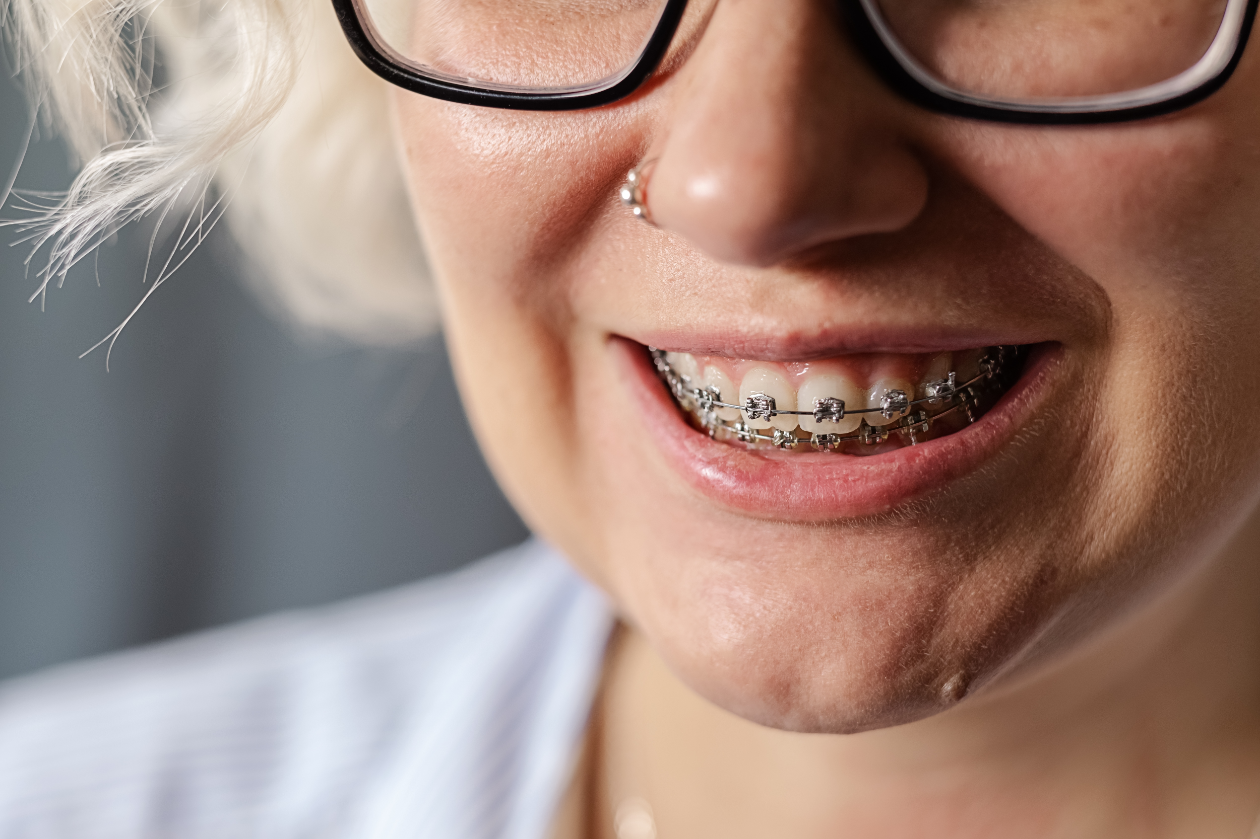
| Clear braces | Adults wanting a discreet fixed option | Low visibility |
| Lingual braces | Behind-the-teeth placement | Hidden |
| Invisalign clear aligners | Mild to moderate cases, lifestyle flexibility | Nearly invisible |
Self-ligating metal braces are hard-working, durable, and highly effective for a wide range of cases. Modern brackets are smaller and more comfortable than older designs.
Clear braces use tooth-colored brackets that blend in with your natural enamel. A great choice if you want a fixed appliance without the metal look.
Lingual braces attach to the back of your teeth, making them essentially invisible from the front.
Invisalign uses a series of custom clear aligners you wear over your teeth. They’re removable for eating and brushing, which many adults love.
One quick word of caution: mail-order aligner services skip the in-person exam, imaging, and ongoing supervision that make treatment safe and predictable. Teeth are attached to living bone. Moving them without professional oversight can create issues that are far more difficult to correct later.

How Does Adult Treatment Differ from Treatment for Teens?
The mechanics of moving teeth are the same at any age, but adult treatment has a few distinct characteristics worth knowing about.
- Your jawbone is fully developed, so teeth move a bit more gradually than they do in a growing teen.
- Treatment timelines may run slightly longer, though this varies from case to case.
- Existing dental work like crowns, bridges, and implants requires careful planning up front.
- Adults tend to be highly motivated and consistent with wear and hygiene, which often leads to excellent outcomes.
You’re not at a disadvantage. You just have a personalized treatment approach built around your specific mouth and history.
What to Expect: Treatment Timeline and Process
The adult treatment process follows a clear, predictable path from start to finish. Here’s what to expect.
- Free consult. You’ll meet the team, share your goals, and get a look at your options. This visit is relaxed, no pressure. Schedule a free consult
- Exam and imaging. We use digital X-rays, photography, and 3D scanning to map your teeth and bite.
- Personalized treatment plan. Your orthodontist walks you through the recommended approach and timeline.
- Active treatment. Most adult cases run 18 to 36 months, depending on complexity. You’ll come in every 4 to 8 weeks for adjustments or new aligner sets.
- Progress check-ins. Regular photos and updates help you see how far you’ve come.
By the end, you’ll have the straighter smile you’ve been picturing, plus a bite that works better for the long haul.
Special Considerations for Adult Patients
Adults often bring a bit more dental history to the table, and that’s completely fine. It just means your plan needs to account for a few extra factors.
- Existing crowns, implants, or bridges. Crowns can typically have brackets bonded to them, and implants stay put during treatment, so we plan tooth movement around them.
- Gum health. Any gum disease should be addressed with your dentist before starting treatment. Healthy gums are the foundation of good tooth movement.
- Adults over 50 or 60. Age itself isn’t a barrier. What matters is bone density, gum health, and the condition of your teeth.
- Combining treatments. Many adults pair orthodontics with whitening or cosmetic dentistry once teeth are aligned, giving them a beautifully finished smile.
Your orthodontist will coordinate with your general dentist and any specialists to make sure everything works together.
Life After Braces: Retainers and Maintaining Your Results
Here’s something worth being upfront about: retainers are for life. Teeth naturally want to shift as you age, especially the lower front teeth, so wearing your retainer is what protects your investment.
You’ll typically choose between:
- Fixed retainers, a thin wire bonded behind the front teeth. Out of sight and doing its work 24/7.
- Removable retainers, clear trays or classic Hawley-style retainers worn at night.
Many adults use a combination. Your orthodontist will recommend the approach that best protects your new alignment. Occasional follow-up visits help catch any small changes early.
How to Decide if Adult Orthodontics Is Right for You
Still weighing whether now is the right time? A few honest questions can help you decide.
- Am I self-conscious about my smile in photos, meetings, or social situations?
- Do I have crowding, gaps, or a bite that’s been bothering me for years?
- Am I dealing with jaw discomfort, uneven tooth wear, or difficulty cleaning certain teeth?
- Would I feel more confident personally or professionally with a straighter smile?
- Am I ready to commit to the visits and care that treatment involves?
If you’re nodding along to any of these, a free consult is the best next step. You’ll get a professional look at your teeth, honest answers about your options, and no pressure to decide on the spot. Look for an orthodontist who takes time to listen, explains your options clearly, and treats you like family rather than a number.

Conclusion and Next Steps
It is absolutely not too late. Adults of every age are choosing orthodontic treatment and walking away with healthier smiles, better bites, and a fresh dose of confidence.
At Storms Orthodontics, we help adults across Northwest Arkansas discover just how doable, and rewarding, this experience can be. It’s never too late to start, and the best time is now. If you’re curious about your options, reach out to schedule a free consult and let’s talk through what’s possible for your smile.